Know someone who'd love Litopia? Share the link below.









Falcon Theory
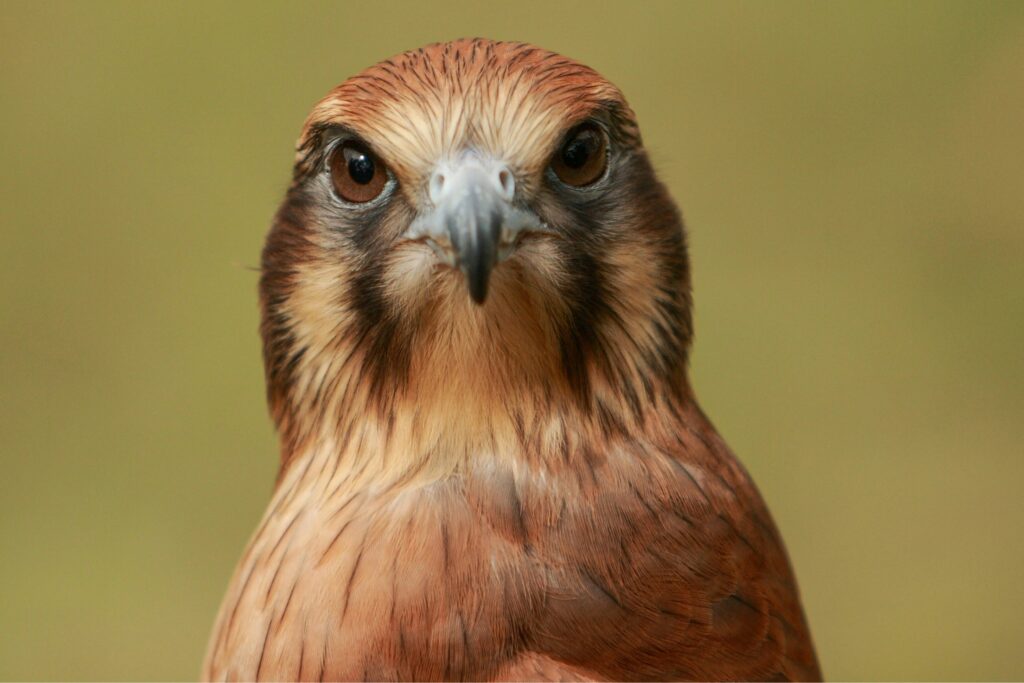
“So,” said Goethe to his friend Johann Peter Eckermann, “let us call it a Novelle, for what is a Novelle but an outrageous incident? This is the real meaning, but most Novellen published in Germany today are mere anecdotes.” [1]
The Novelle is a specific form in German literature. While the novella is defined by its length, the Novelle can be anything from a few pages to a slim book. It usually concerns a single incident that is new, i.e., novel, and as per Goethe above should be something outrageous and unprecedented, ideally an affront to societal norms.
Let’s say you have an idea for such a startling occurrence but are not sure how to wrangle it into the confines of a novella (or short story or novelette, let’s not get pedantic about word counts). For the next step you want to look to another 19th-century German author.
Nobel Laureate Paul Heyse was a prolific writer, producing 180 Novellen, 60 plays and 8 novels. He also found time to write an introduction to the German Novelle Treasury [2], in which he describes his ideal Novelle: the Ninth Tale of the Fifth Day in the Decameron by Giovanni Boccaccio (1351).
The tale goes something like this:
Federigo, a knight unmatched in skills and gallantry, loves wealthy and beautiful Monna Giovanna. To win her love, he spends everything he has, but it is all in vain as she marries another. With only one possession remaining, his beloved falcon, he retires to an impoverished country life.
When Monna Giovanna’s husband dies, she also moves to the country with her young son, who takes a fancy to Federigo’s falcon. When the son falls gravely ill, he begs his mother to ask the knight for the bird, the one thing that can cure him.
The next morning, Monna Giovanna visits Federigo. He panics because he has nothing to serve her for breakfast, but then he spies his falcon. After a moment of anguish, he wrings its neck, roasts it on a spit and plates it up. After her delicious breakfast, Monna Giovanna reveals her reason for coming. Aghast, Federigo admits his deed, laying its beak and feathers as evidence before her.
With her son dead from a lack of falcon, Monna Giovanna marries Federigo, for she now understands the true depth of his love for her.
Drawing on this endearing and cheerful tale (his words, not mine), Heyse developed his Falcon Theory, noting that Boccaccio’s falcon is “that one specific thing that distinguishes this story from a thousand others”.
“One thing? Just one thing? You stick to that and everything else don’t mean shit.”
-Curly, City Slickers
Incidentally, Heyse also asserted that a Novelle must have “a strong silhouette” in that it should be possible to “summarise its content in a few lines”. Elevator pitching, 1870s style.
In Heyse’s eyes, Boccaccio’s falcon is not merely a symbol but the beating heart of the story. Its death is a suitably outrageous incident — after all, how desperate is he who slaughters his pet to feed his love?
But it also goes beyond that. The Falcon Moment is the point of no return or, as Heyse puts it, the “external turn of chance” that “develops the characters more deeply”. It first gathers together the story’s emotional threads — Federigo’s love and sacrifice, Monna Giovanna’s hope and despair, the son’s belief and desire, and the unfortunate bird’s friendship — before leading to a happy ending.
Falcon Theory finds use in medieval romance and 19th-century German literature, but what about modern storytelling? How can you use it to hone your work?
The novella in particular – more restrained than a novel but with further-ranging themes and plots than a short story – seems a good place to start. If you have something of that scope, you could begin by asking yourself these five falcon questions:
- Is there an outrageous incident, i.e., is your story an anecdote or does it involve an unprecedented, almost offensive event?
- Do all the characters’ threads lead towards and away from the outrageous incident?
- Does the outrageous incident involve one specific thing that can carry your story’s themes?
- Does this one specific thing have emotional weight for the characters?
- Can this one specific thing create a memorable image for your readers?
If you’ve answered yes to all of the above, you may have a falcon perched on your arm…wunderbar!
References
[1] Eckermann, Johann Peter. Gespräche mit Goethe in den letzten Jahren seines Lebens. Leipzig: F.A. Brockhaus, 1836-1848.
[2] Heyse, Paul. “Einleitung.” Deutscher Novellenschatz. Edited by Paul Heyse and Hermann Kurz. Munich: R. Oldenbourg, 1871.

Laura Rikono's Newsletter
Subscribe to receive newsletters from Laura Rikono directly in your inbox.
Laura Rikono's Newsletter
Subscribe to receive newsletters from Laura Rikono directly in your inbox.

Falcon Theory
Brilliant. I can feel my mind stretching. Thank you very much for this highly enlightening piece.
I love this. So much to apply to writing today and a great lesson in literature.
Fascinating read as ever.
This does seem to be an Italians view of a romantic German male. Afterall the purpose of a falcon is to hunt game that are nice to eat… What kind of putz eats it instead of going out and catching a nice plump rabbit and then cooking it with some… Read more »
What erudition. I love it. And what a sad story. She might have decided he was somehow magically to blame for the death of her child. And WHO eats an apex predator, excuse me? But, nothing is so compelling as the idea of Fate, Wyrd, Destiny versus Free Will, and… Read more »