Know someone who'd love Litopia? Share the link below.









Future Abstract: Fights at Night
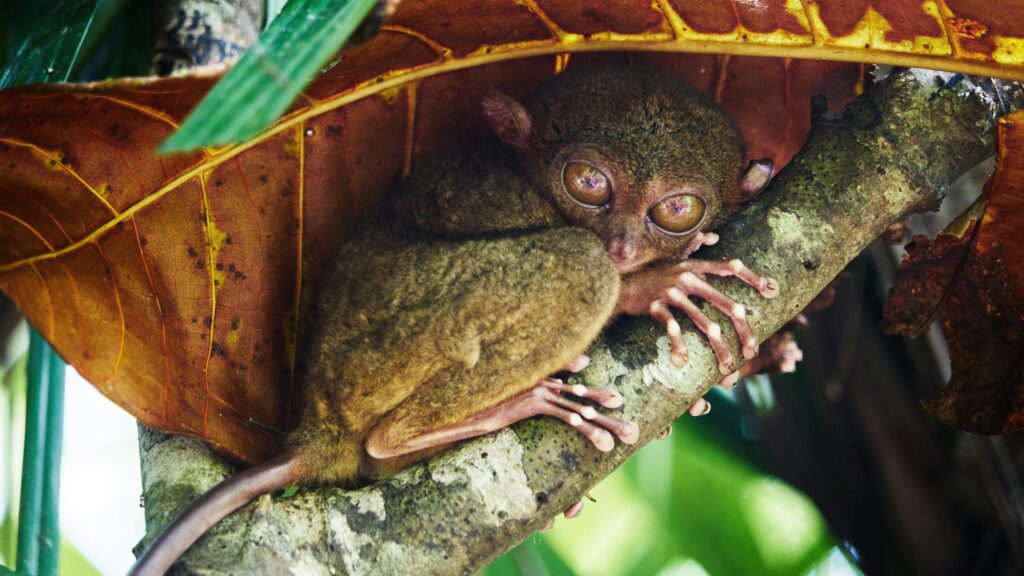
SATIRE ALERT: The following abstract is entirely fictional and does not represent actual events or scientific research. Tarsiers are not currently at war with pollination drones.
With pollinator populations crashing worldwide, automated pollination has become a critical element in global food security. Southeast Asia’s prized durians, renowned for their onion-turpentine-mouldy sock aroma, are no exception. With the recent extinction of fruit bats (durians’ main pollinators), farmers are increasingly using pollination drones to meet the insatiable demand for the lucrative fruit.
However, this technological solution has encountered an unexpected adversary: Tarsiers. Durian pollination occurs at night, which coincides with the main hunting period of these small yet agile primates. Notably, researchers are documenting increasingly sophisticated anti-drone behaviour, including miniature spear-throwing and coordinated group attacks on rotor assemblies (Boffins & Bananas, 2031).
To investigate further, we observed tarsier-drone interactions in the field. Using camera traps and microphones, we recorded 217 distinct interaction events across several orchards, although three of these were likely misdirected mating behaviours. Our acoustic analysis revealed that the drones’ navigation systems, which use high-frequency sound to locate flowers in the dark, broadcast on the same frequency as the tarsiers’ territorial screams. In essence, the drones are blaring declarations of war.
We conclude with a few suggestions for encouraging a ceasefire. Drones’ navigation systems could be modified to emit friendly messages across the tarsier acoustic spectrum. Strategically placed peace offerings in the form of packets of termites and tree sap also show pacifying potential. Meanwhile, we call for further study on the interactions between automated agricultural systems and the species they share space with. Today it’s tiny tarsiers, but tomorrow we could be screaming at something much larger.
Future Abstracts are brought to you by We, the Future Researchers.

Laura Rikono's Newsletter
Subscribe to receive newsletters from Laura Rikono directly in your inbox.
Laura Rikono's Newsletter
Subscribe to receive newsletters from Laura Rikono directly in your inbox.

Future Abstract: Fights at Night