Know someone who'd love Litopia? Share the link below.









Two Debuts and a Finale
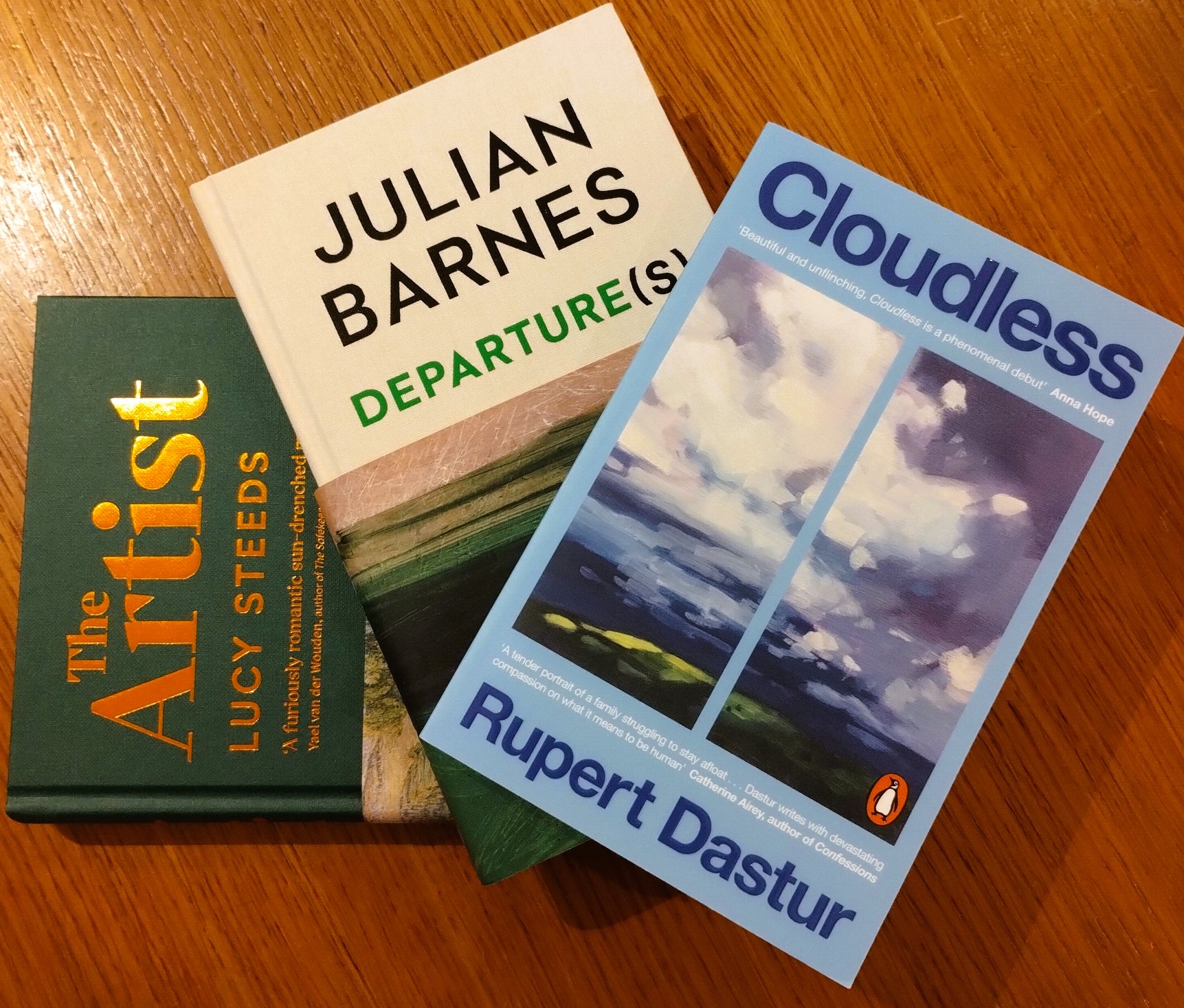
You won’t be surprised to know I love reading, and you may know that I often have several books on the go at once. To me, this is only like watching episodes of different TV shows in the same week or listening to more than one podcast on a regular basis. But it does mean that some novels take a while to reach the end with me, and some remain unfinished for months or years. I usually get back round to them eventually.
But so far in 2026, I’ve had better discipline, and I’ve finished fifteen books as of the end of March. (Ducks, Newburyport might see me to the end of the year.)
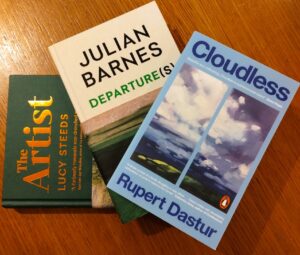
There are three of note which I’d like to share with you, if I may.
The first was The Artist by Lucy Steeds which has had a lot of attention and won the Waterstones Book of the Year, 2025. I might not have chosen to read it, but one of my colleagues lent it to me, and I felt as if I ought to. It’s set in 1920s France and is about a painter so vividly depicted alongside famous characters such as Paul Cezanne and Peggy Guggenheim, that I had to double-check he wasn’t a real person. The blurb on the cover promising a sun-drenched mystery is completely misleading and would have been enough to put me off had someone not personally recommended it. Any mystery is dispelled early on with seeds sown from the prologue. And I prefer that. I loved it and would recommend.
I did spot a medical anachronism, which brings both irritation and a sense of smug satisfaction, though I doubt it would matter to anyone else. The GP who lent the book to me is much younger than I am and didn’t know that the term sepsis wasn’t in use in healthcare until the late 1990s. Although the word comes from ancient Greek and was used thousands of years ago, modern medicine used terms like septicaemia and septic shock before bacteraemia and sepsis overtook these terms at some point within my nursing memory of about thirty years. Anyway, the writer more than got away with it, and it shouldn’t spoil anyone’s enjoyment of this deserved award-winning novel.
The second of the two debuts is Cloudless by Rupert Dastur. There’s been much less fuss made about this novel, and I didn’t know about it until I saw it on the front table of a bookshop and recognised the author’s name. Rupert is or was the EIC of a Lit Mag called The Short Story, and he also ran the Cambridge Short Story Prize. He gave me the kindest personalised rejection for one of my early submissions, highlighting the strengths of my writing and encouraging me to keep at it. I’m disappointed to see that TSS hasn’t published anything for a while, but I guess that’s because he’s been busy with his novel. Anyway, I was curious enough to have a read, and I absolutely loved it. Engrossing from first to last page, it’s set in Llandudno in 2004 where a farming family await the return of their eldest son from Iraq. Dastur tackles themes of addiction, sexuality, family dynamics and wartime politics with accuracy, sensitivity and insight. I found empathy with every character and felt their losses acutely.
From firsts to lasts, I listened to Departure(s) by Julian Barnes, read by the author. I enjoy audiobooks, and I’m an aural learner, so don’t try to tell me it’s cheating. The sound of a text read by a good narrator or the author is an experience which often surpasses that of reading on paper and takes no less concentration. Barnes reads beautifully; I could hear all the emotion and intelligence that goes into his writing, and I could hear the pages turning.
Barnes has written thirty-two books, including non-fiction, and Departure(s) is purported to be his last novel. It’s deemed a novel, but there’s a good deal of blatant autobiography which doesn’t resort to fictionalising many names or incidents. This is one of the things I love about it – the blurring of lines between fact and fiction with no concern for where one ends and the other begins. That’s life as many of us experience it, especially where memory is involved.
A good deal of Departure(s) addresses memory and the things that go wrong with it. Barnes approaches human deterioration from a clear-eyed and unsentimental viewpoint. But unsentimental doesn’t mean that this book lacked emotion. I cried at the end, when he bid me what felt like a very personal goodbye.
So, if you were only going to take one of my recommendations, which would it be?
If you like vivid and colourful, beautiful prose with a love story secondary to love of art, then you won’t be disappointed by The Artist. Short, short chapters are a draw too. The pages keep turning, and it’s a quick read.
If you need deep reflection on life and what it is to be human as we age, Departure(s) is written by someone who truly knows and can make you feel it. It’s a short book, and I wanted more. Keep your tissues handy.
But, if pushed, Cloudless is my pick of the three. If you’re a writer, you will marvel and envy Dastur’s prose and storytelling. Then you’ll pull yourself together and realise you’ve learned a lot from reading it.
The Artist by Lucy Steeds is published by John Murray, 2025
Cloudless by Rupert Dastur is published by Penguin, 2026
Departure(s) by Julian Barnes is published by Jonathan Cape, 2026
Rachel McCarron's Newsletter
Subscribe to receive newsletters from Rachel McCarron directly in your inbox.
Rachel McCarron's Newsletter
Subscribe to receive newsletters from Rachel McCarron directly in your inbox.

 Songs for Beginners
Two Debuts and a Finale