Themes
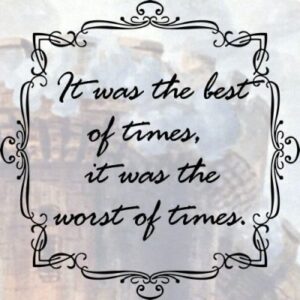
War and peace, good versus evil, love-hate, rich and poor, kindness and selfishness, wisdom and foolishness…from fairy tales to classics to contemporary fiction, opposites have always played a key role in storytelling.
Take The Hobbit – a home-loving creature must undertake a great adventure in order to fulfil a quest.
Or A Christmas Carol – a miserly man who hates festivities must learn to embrace the spirit and goodwill of Christmas.
Or the exploration of sanity and insanity, and cowardice and heroism in Catch-22.
I could go on!
Characters
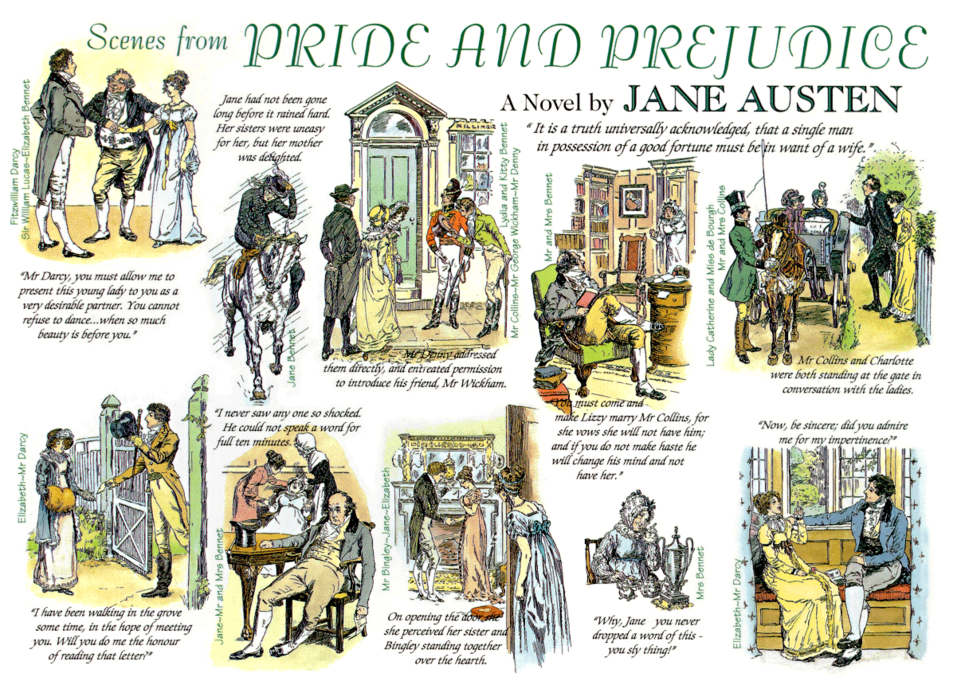
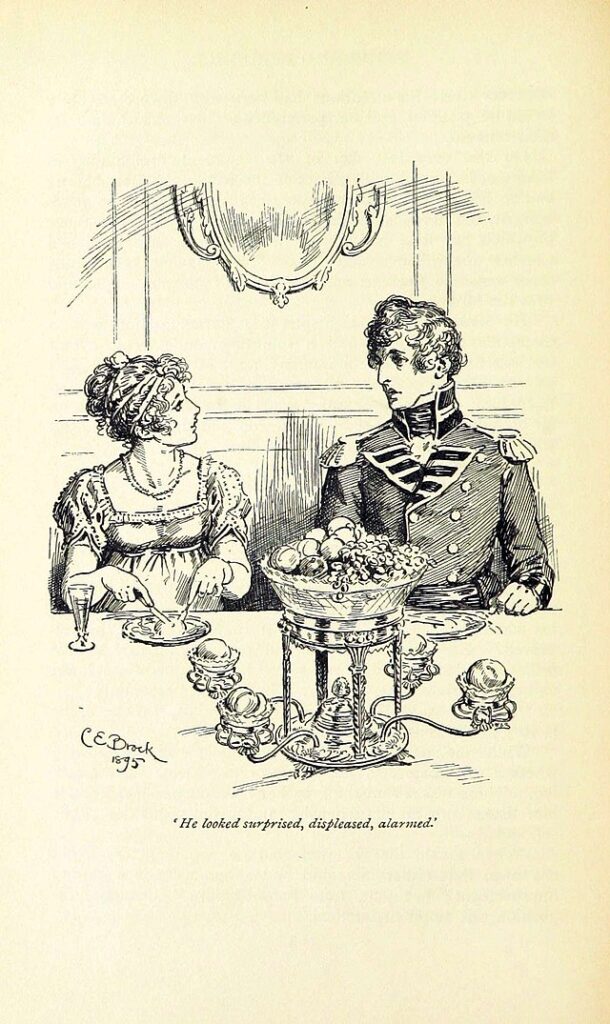
As well as within theme, contrast between characters can be an effective source of conflict. Protagonists need an antagonist (if not an antagonistic ‘force’); multi-pov novels need to illustrate contrasting perspectives; characters should hold mirrors up to each other, emphasising the strengths and highlighting the flaws of each other. Jane Austen knew this well: that every reserved, proud Darcy needs a spirited but prejudiced Elizabeth (Pride and Prejudice); that every heroine with good sense needs a sister of great sensibility (Sense and Sensibility); and every sensible, warm-hearted heroine needs a silly or selfish family (Persuasion – but take your pick really!).
Settings
Setting can also demonstrate contrast – whether that’s the ‘when’ or the ‘where’ of the story. Dual timeline novels, like Stephen King’s IT, or Kristin Hannah’s The Nightingale, show how things have changed between the past and the present ‘before’ and ‘after’ a significant event. Flashbacks and flashforwards work in a similar way.
Including contrasting locations in a story is perhaps less common, but take the example of Peter Mayle’s novel A Good Year, in which a London stockbroker inherits a vineyard in Provence, or Aldous Huxley’s stark difference between the World State and the Savage Reservation in Brave New World. Such contrasting settings often reflect key aspects of theme or character.
Beginnings and Endings
I often read about how important change is within a story, whether that’s a character’s change of heart, fortune, perception, understanding (‘lessons learned’), self-awareness, maturity, happiness or self-acceptance. I can think of very few novels where a character isn’t changed in some way by the events that take place, and this change is often a one-eighty from their starting point.
Experience
I love exploring how characters change throughout the course of a story, and I love contrasting multiple perspectives. Dual timeline narratives are something I haven’t attempted yet, and I find the idea of writing one quite daunting, but I do enjoy flashbacks to demonstrate how the past has shaped, and contrasts with, a character’s present. I’m fascinated by books with different settings but haven’t really explored this in my own writing.
Final Thoughts
Do you have any favourite novels which demonstrate contrast/opposites?
How have you shown this in your own fiction?

Sign Up For Claire Gallagher’s Newsletter Updates


Structuring Scenes
How to craft scenes with purpose
I watched another excellent webinar recently. The content was helpful as both a planning tool and as an editing tool. Scene structure mimics story structure, but on a…







On The Honest Authors’ podcast, Gillian McAllister once mentioned that she was asked, “Do you really think that?” about something controversial she’d written in one of her novels….
Bear With Me! Okay, this is probably a weird analogy but this is how my (bird-brained!) mind works. So, in terms of the title question, I’ve thought long…

I’ve been thinking about your post over the last couple of days. It’s helping with my tricky rewrite of Forgotten Songs. I’m using a juxtaposition of setting to demonstrate Sarah’s conflicted state of mind – from Neil reading to her when they are alone, to a noisy pub gathering where… Read more »
The Left Hand of Darkness by Ursula le Guin is interesting in its use of juxtaposition. Its title comes from an in-book psalm that starts ‘Light is the left hand of darkness, and darkness the right hand of light.’ The book explores how opposites are actually interdependent. A love story,… Read more »
I tend to have mainly good guys and gals in my literary attempts. I should have more light/shade, good/bad, love/hate characters, I suppose. Gotta have a good old thunk about it all.