The Other Side of the Table
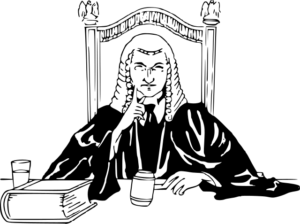
I recently found myself in the situation of being able to vote for my favourite novel extract. The author of the anonymous sample with the most votes will win a bursary to enrol on a course worth several thousand pounds. The authors are all unpublished and all identify as belonging to an underrepresented group.
Now usually I’m in the opposite seat, sending off my own chapters, short stories, flash fiction etc to be judged by others. I’ve been fortunate enough to win or place in a couple of these competitions, and sign with a literary agent, but, more often than not, I’ve received rejections. Such is the life of the writer!
As well as feeling the great privilege and responsibility of being in the position to select one writer to receive this opportunity and boost to their confidence (and possibly career), it was also a lot of pressure. There were thirteen samples in all, which meant twelve authors are going to be disappointed.
So how did I choose?
Voters were given a broad remit – we could base our decision on whatever criteria we wanted. Examples included: emotional impact, clarity, creativity, originality, technical skill, potential, or overall effectiveness.
I started by reading the samples (roughly six pages each) and noting down a shortlist. This left me with five entries. To create the shortlist, I eliminated those openings where I felt I’d read the story before, the voice wasn’t especially strong, and where there was a lot of back story that stalled the narrative.
I then re-read each of the five. Comparing them directly, I had a clear winner and a clear second choice. So what was it about these extracts that made them stand out? Well, both had an excellent voice, and my first place piece had the added bonus of originality of concept and emotional impact.
But what do I mean when I talk about ‘voice’? For me, it’s quite a nebulous thing and difficult to define, but I’m going to try. I suppose I’m talking about writing that expresses personality, where a reader (me) gets a taste of the character’s (or author’s) mind, i.e. their perspective on life, their outlook on what’s happening as events unfold. Tone and style come into play too. What mood has been set? What stylistic choices has the author made?
Voice is particular rather than generic. I just googled ‘what is narrative voice’ and the word ‘unique’ was used in the definition. I’m wary of this word, however, because is any piece of writing truly unique? How exactly can an author craft such a voice? It’s like trying to find the Holy Grail. I watched a workshop on hooks once, and the tutor (a Big-5 commissioning editor) said she hated the phrase USP, because it places too much pressure on the author. Instead, she preferred the phrase ‘point of difference’, and I quite liked that and think it can be applied to voice too.
After reading the samples and casting my online vote, I re-read the opening of my own work-in-progress. Having read other writers’ work with a critical eye, it made me see my own with fresh eyes (which is no easy feat!). To me, it highlights how important it is for authors to read and consider writing which is different from our own, whether that’s in published novels or in Litopia’s Lab or Huddle (if you haven’t got stuck in to these yet, do!). If the piece works, why? If elements don’t work, why not? And can I apply the answers to my own writing?
The exercise gave me a taste of what it’s like for literary agents and editors. When they only have so much space on their lists, they must inevitably take on the role of ‘judge’ or ‘gatekeeper’ (a term that divides people!). They will have their own criteria, their own preferences, and must ultimately disappoint the vast majority of authors who send them their work.
So, the moral of the story is, make their job as difficult as possible by not giving them a reason to say ‘No’!
Final Thoughts
What criteria would you use to ‘judge’ an opening? Can you apply this to your own work?
How do you define ‘voice’?
Which published novels have a great voice? Can you explain how the author achieved this?
What’s your story’s ‘point of difference’?
Can you identify how you want the reader to feel as they read your first few pages?

Sign Up For Claire Gallagher’s Newsletter Updates


Structuring Scenes
How to craft scenes with purpose
I watched another excellent webinar recently. The content was helpful as both a planning tool and as an editing tool. Scene structure mimics story structure, but on a…








On The Honest Authors’ podcast, Gillian McAllister once mentioned that she was asked, “Do you really think that?” about something controversial she’d written in one of her novels….
